

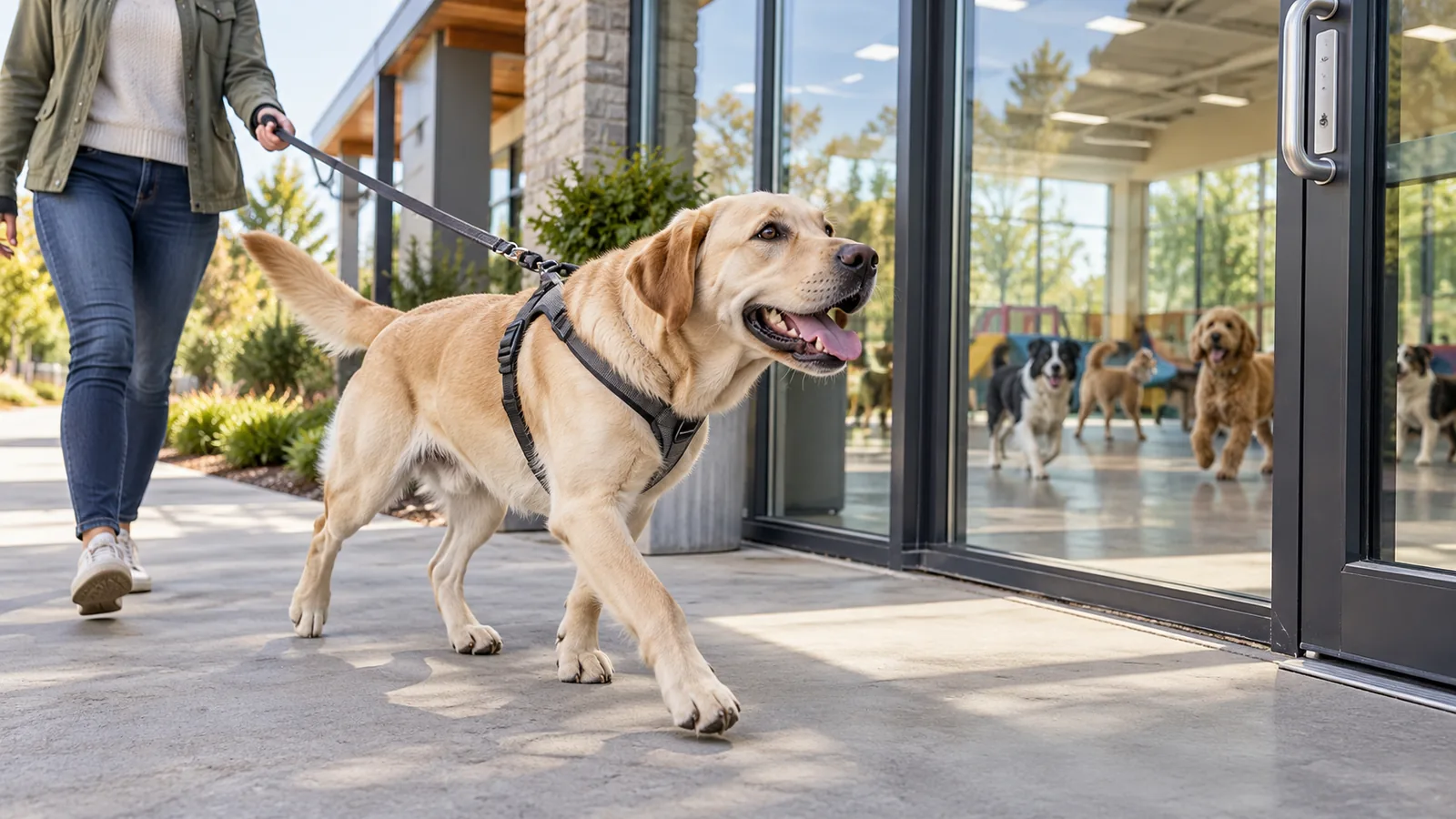
Most daycares ask for proof of rabies, distemper and parvo, and Bordetella before your dog's first day, and many want canine influenza, leptospirosis, and a recent fecal check as well. Those rules exist because close-quarters play moves respiratory and intestinal illness through a group fast. Vaccines and year-round parasite prevention lower that risk a great deal, but they do not cover everything a busy play floor asks of a dog. Temperament, age, and any condition your dog already lives with matter just as much, and no requirement list screens for those.
LaGrange Veterinary Hospital can get your dog ready for daycare with the thorough, head-to-toe exam we do at every visit, not just a quick trip through the vaccine schedule. We keep vaccinations and parasite prevention current for families across Lagrangeville, and a hands-on physical tells us whether your dog's joints, airway, weight, and teeth are up to a long day of hard play. If your dog has a heart murmur, early arthritis, or a history of getting overwhelmed in a crowd, we will tell you honestly whether a busy play floor is right for them, and what to ask the facility before you book. Come see us before the first drop-off, and we will make sure nothing gets missed.
Dog Daycare in a Nutshell
- The questions you ask before you book tell you more than the lobby or the website.
- Vaccines and year-round parasite prevention lower the risk of illness in a group without removing it.
- Group play suits some dogs and overwhelms others, and that shifts as a dog ages or develops joint, heart, or airway problems.
- A wellness visit a week or two ahead catches health surprises before the play floor does.
What Makes a Good Dog Daycare?
The best facilities do five things well:
- They have basic health requirements to walk in the door, like vaccinations and parasite prevention
- Match dogs thoughtfully, by size, play style, and temperament
- Supervise closely, and have the training to know when and how to intervene when needed
- Build real rest into the day, not just expecting dogs to play non-stop for eight hours
- Tell you honestly how it went, and whether your dog is actually suited for group play
Your dog should arrive with some practice behind them, since handling a group well usually comes from structured socialization: gradual, positive introductions to new dogs and places rather than being dropped into a crowd to sort it out. Quality varies building to building, so ask who trains the handlers and in what, since reading stress signals is a learned skill rather than an instinct.
Is Daycare Right for Every Dog?
Daycare isn't right for every dog, and plenty are happier with a quiet day at home. Dog tolerance sits on a spectrum, and many dogs land in the middle, happy with two or three familiar friends and overwhelmed by twenty strangers.
Stress shows up in canine body language long before a growl does, so it helps to know what you're watching for when you see your dog in a group.
- Signs your dog isn't comfortable: lip licking, yawning, turning away, a tucked tail, or a dog who stands frozen at the edge of the group.
- Signs the fit is right: a loose body, play that pauses and restarts, a dog who drinks, naps, and goes back for more.
A dog who loved the crowd at three may find it exhausting at nine, and our veterinarians can help sort a temperament change from a physical one, since early arthritis, a heart murmur, or fading hearing all change how a dog handles a crowd. For a dog on twice-daily medication, one managing a chronic illness, or one still healing from surgery, group play can be more stress than fun, and a sitter at home gives company and coverage without the crowd.
Is Daycare Safer Than the Dog Park?
A well-run daycare is usually the safer choice, because it screens who comes through the door, groups dogs on purpose, and pays someone to watch them. The real dog park risks are what nobody checks at the gate: vaccine records, parasite prevention, play style, and whether anyone is watching closely enough to step in.
Parks still work for some dogs, usually confident, socially skilled adults visiting at quiet hours with a person who's paying attention. At a park, the stranger whose dog starts a fight is often gone before you've checked your own dog over. If you're weighing one against the other, reach out and we'll talk through your dog's age, temperament, and health.
When Can a Puppy Start Daycare?
Puppies shouldn't join a general daycare group until the core vaccine series is finished, because immunity is still building and a shared play floor is one of the likelier places to meet parvovirus. Some facilities run dedicated puppy groups with stricter health rules, which can be reasonable once a puppy is further along in the series.
For a puppy group, ask whether puppies stay fully separate from the adult dogs, how often floors and toys are disinfected, how long a session runs, and how many puppies one trained handler covers. Short sessions with frequent naps beat a long day at that age.
Puppy Classes, Daycare, or the Dog Park?
The window for puppy socialization starts closing around twelve to fourteen weeks, before those first shots are complete, so holding a puppy back until the final booster trades one risk for another. Early socialization in a structured class, on cleanable indoor floors with vaccinated, age-matched classmates, is the safest way to socialize during the vaccination period. Dog parks are the worst of the three for a young puppy: shared ground, unknown dogs, nothing verified. Once the series is complete and a puppy plays politely in class, the move to daycare usually goes smoothly.
What Should You Ask Before You Book?
Ask for numbers and protocols rather than reassurance, because a strong facility answers each question specifically and a careless one stays vague. Safe group play depends on handlers who spot a tense moment and interrupt it early instead of waiting to break up a fight. Introducing dogs well means a slow, controlled meeting with one calm resident dog rather than an open gate into a crowd.
| Ask this | A good answer | A red flag |
| How many dogs per handler? | A specific number, with trained staff inside the group | "We keep an eye on things" |
| How are dogs grouped? | By size, age, and play style, adjusted as dogs change | Everyone in together |
| What does screening involve? | A temperament evaluation plus a short trial day | Records in, start Monday |
| Toys or treats in the group? | No toys, food, or high-value items on the floor | Toys and food left out unsupervised |
| When a dog gets overwhelmed? | Early interruption, a quiet break, a call to you | "They work it out" |
| How much rest do dogs get? | Scheduled kennel rest between play blocks | Play from drop-off to pickup |
| If my dog is hurt or gets sick? | A written protocol, your veterinarian called, you called right away | Vague reassurance |
| Can I see the play area? | Cameras or a viewing window | No access past the lobby |
| Seniors or dogs on medication? | Quiet groups and a documented medication routine | No accommodation offered |
What to Look For in the Building and the Play Yard
Summers in Lagrangeville get humid enough that a play room with no AC or yard with no shade can turn dangerous by mid-afternoon, and winters cut outdoor time short, so ask what the dogs do on those days. Ask how the floors drain and what they're made of, since rubber and sealed surfaces are kinder to joints and easier to disinfect than concrete, and ask who is trained in canine first aid and CPR and how staff recognize a dog in heat trouble.
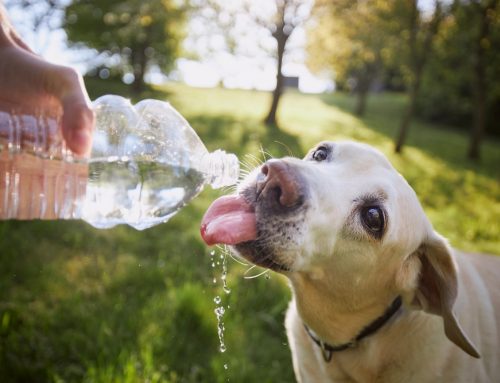
Flat-faced breeds, seniors, overweight dogs, and any dog with a heart or airway condition overheat faster, and mild overheating can tip into heat stroke fast on a humid day. A dog who comes home panting hard, wobbly, brick-red in the gums, or vomiting needs cool tap water and moving air, never an ice bath. Call us right away if you see any of that after a daycare day.
Which Vaccines and Parasite Prevention Does Daycare Require?
Daycare vaccine and parasite requirements vary from facility to facility, so ask which ones they check and how they verify them, because the dog with lapsed records is the risk to everyone else in the room.
| Protection | Covers | Why a group setting asks for it |
| Rabies | Rabies virus | No reputable facility takes a dog without it |
| DHPP | Distemper, adenovirus, parainfluenza, parvovirus | The viruses that move fastest in close quarters |
| Bordetella | A main cause of kennel cough | Standard anywhere dogs share air |
| Leptospirosis | Bacteria shed in wildlife urine and standing water | Play yards and puddles overlap with wildlife here |
| Canine influenza | Canine flu viruses | Added by some facilities, especially after a regional outbreak |
| Fecal test, year-round prevention | Intestinal worms, heartworm, fleas, ticks | Shared ground and close contact make spread easy |
Intestinal parasites spread through contaminated ground and stool in a shared yard, and plenty of dogs shed eggs while looking healthy, so a routine stool test is worth doing. Some of the bugs that circulate in a group have no vaccine at all, which is why many facilities also require a symptom-free stretch before a dog returns after a cough or diarrhea. We can confirm your dog's vaccine timing, provide the records a facility asks for, and build preventive care around how your dog spends the week.
What Illnesses Can Dogs Catch at Daycare?
Dogs at daycare can pick up respiratory, intestinal, skin, and parasite problems because they share air, water bowls, and ground, even where cleaning is thorough and vaccine rules are strict. Most of what circulates is mild and treatable, though parvovirus and canine influenza move fast enough that an early phone call beats watching how the week goes.
- Respiratory: Kennel cough is a group of bugs, Bordetella and parainfluenza among them, bringing a dry honking cough a few days after exposure. Canine influenza moves quickly through a crowded room and usually adds fever and lethargy.
- Intestinal: Parvovirus survives in soil and on surfaces for months and hits incompletely vaccinated puppies hardest. Giardia spreads through contaminated water and stool, and tends to show up as on-and-off soft stool rather than dramatic illness.
- Soil and standing water: Leptospirosis travels through infected urine and the standing water it contaminates, so a muddy Hudson Valley play yard a day after rain is a realistic exposure.
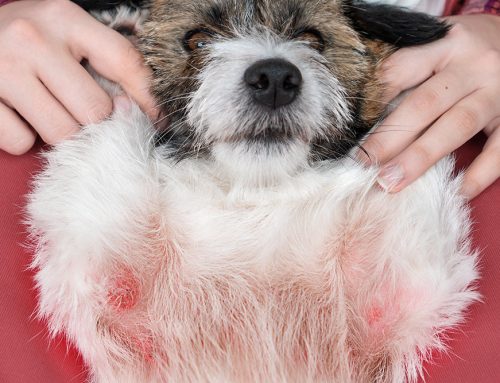
- Skin and coat: Sarcoptic mange is intensely itchy, passes by direct contact, and can spread to people in the house. Ringworm, a fungal infection rather than a worm, appears as patchy hair loss and also moves between dogs and people. Viral papillomas, warty growths around the mouth, can be passed through contact and typically appear in dogs under the age of two. They go away on their own, but can be dramatic to see.
- Fleas and ticks: One dog with an untreated flea problem can seed a whole play yard, and ticks hitch rides home from any grassy edge.
On-and-off soft stool, scratching that outlasts a day, a bald patch, or a cough after a daycare day all need a look, and we can check a skin scraping, ear swab, or stool sample here.
What Should You Check After Pickup?
Even a well-run daycare produces the occasional scrape, so do a two-minute hands-on check at pickup. Run your hands over the neck, shoulders, flanks, and back legs, check the eyes and ears, and watch how your dog moves once the excitement wears off.
Small surface scrapes can be cleaned at home with warm water or a dilute antiseptic we recommend, then kept from being licked. Don't use hydrogen peroxide or alcohol, which damage tissue and slow healing. A few things need an exam instead of a few days of watching.
- A red, squinting, or weepy eye: it can look like ordinary conjunctivitis when the real problem is a scratched cornea, and telling the two apart takes a look at the eye.
- A puncture, even a tiny one: bite wounds are deceptive, because a pinhole in the skin can sit over crushed tissue and bacteria pushed deep, and the swelling that follows a day or two later is often the first clue.
- Warmth, tenderness, discharge, or a limp that hasn't eased by morning: each of those is worth a call the next day.
How Do You Get Your Dog Ready for the First Day?
Handle the health and paperwork a week or two ahead, so the trial day is only about whether your dog enjoys the group. A booster needs time to take effect, a stool result needs time to come back, and anything the staff should know about medications or your dog's worries is better written down than explained at the counter on a busy morning.
- Update the preventives: heartworm, flea, and tick products current, plus a recent stool check.
- Gather the paperwork: vaccine records with dates, our contact information, and written medication instructions.
- Tell the staff everything: the medication schedule, the thunderstorm anxiety, the sore hip, the growl over a tennis ball last summer. None of it makes your dog less welcome, and all of it keeps them safer.
- Plan a short midweek trial: a couple of hours on a weekday, when the floor is less crowded than a Monday, with a brisk handoff rather than a long goodbye that teaches a dog to dread drop-off.
- Feed lightly beforehand: a small meal before drop-off and a rest before dinner, since a big meal right after hard play can upset the stomach.
- Know what a good pickup looks like: tired, thirsty, and asleep by evening. Limping, trembling, skipping breakfast, or needing two full days to recover means shorten the visits or rethink the fit.
Questions We Hear About Dog Daycare
How often is too often for daycare?
Many dogs do best with two or three days a week rather than five. A dog who can't settle in the evening, gets short-tempered with the other animals, or moves stiffly the next morning is telling you the schedule is too much, and alternating daycare with quiet days usually fixes it. Young, high-energy dogs handle more, while seniors and dogs with arthritis do better with less.
Are the little scratches on my dog's face after daycare normal?
Small surface scrapes are a normal part of group play, and the ones that need an exam instead are punctures, scrapes that swell or feel warm, anything oozing, and any wound near an eye.
Why doesn't my dog want to go anymore?
A dog who used to drag you to the door and now plants at the curb is telling you something changed. It may be the facility: a new group, a different handler, or one frightening encounter you never heard about. Pain is the other common reason and the one families miss, since a sore hip or bad knee makes a day of wrestling miserable. Ask the facility what changed, and let us check the joints and the gait.
Choosing a Daycare That Fits Your Dog
A daycare that suits your dog is worth the search, and a bad experience can take a long time to undo. LaGrange Veterinary Hospital can bring the vaccines current and check the joints, heart, and airway that a long day of play will test, so schedule an appointment in Lagrangeville before the first drop-off and bring your list of questions. Our team is always happy to let you know our experiences with local facilities and make recommendations.